Skip to content
GTD Infrastructure

Battery systems that store energy for the grid.

Battery storage projects help utilities and developers manage when energy gets used. We build battery systems from 10 megawatts (enough for a small community) up to 400 megawatts (enough for a small city). They can stand alone or pair with solar or wind. We also build the substation that connects the batteries to the grid — and bundling both saves months on the schedule.

Setup type
Standalone · Paired with solar/wind
Size range
10 to 400 MW
Storage duration
2 to 8 hours
Grid connection
12.47 to 230 kV
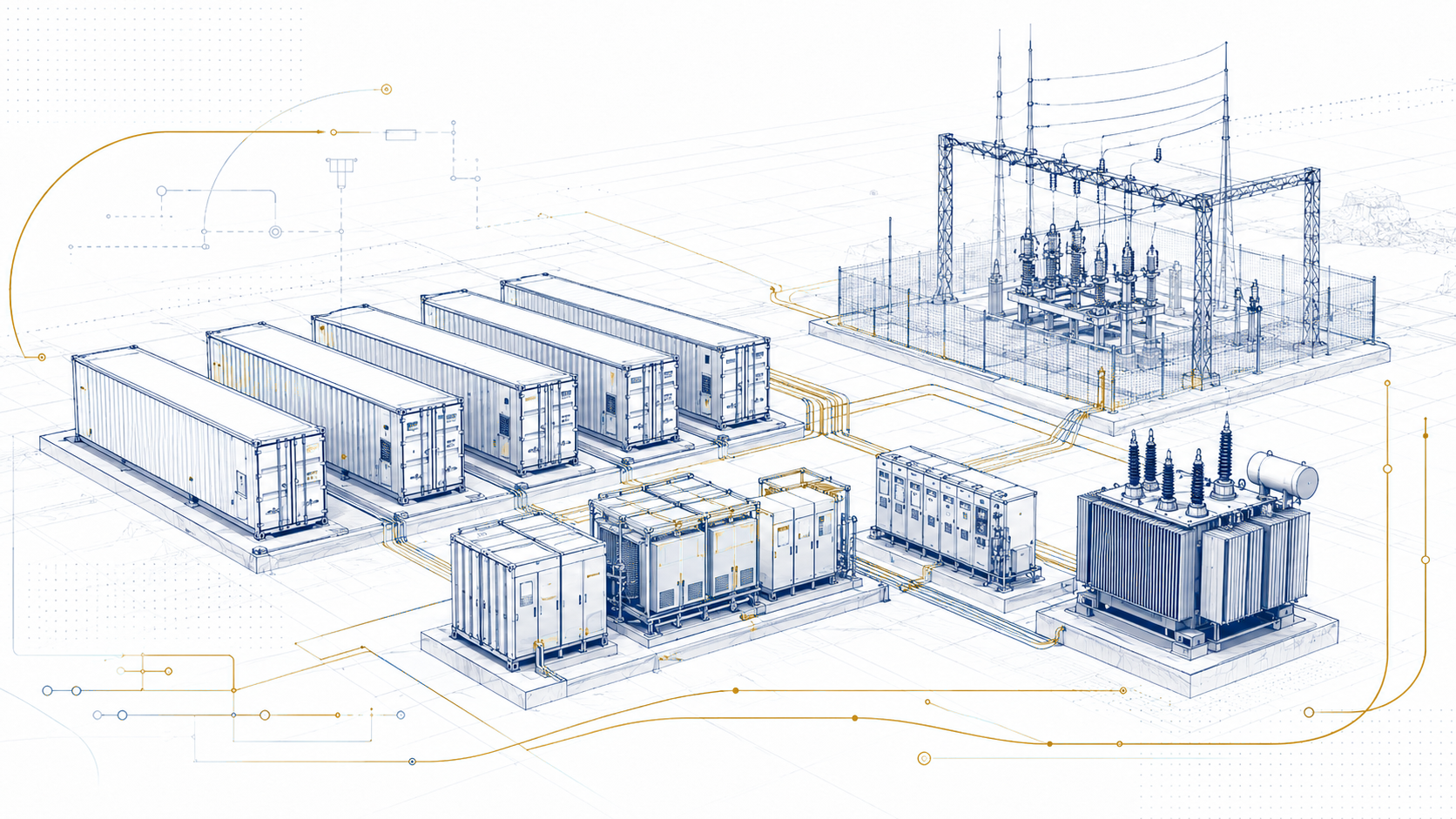
200 MW / 4-hour battery system with grid connection
FIG— 05.A  ·  200 MW / 4-HOUR BATTERY SYSTEM WITH GRID CONNECTION

Battery storage, standalone or paired with solar and wind.

We handle the studies that confirm the battery can connect to the grid, build the substation that ties it in, complete all the testing, and bring the system online. Because we sequence the substation work alongside the battery pad, commissioning happens on schedule instead of becoming a cliff at the end.
  • A

    Standalone battery systems

    Battery systems on dedicated sites, sized for the local grid. We handle the site work, foundations, equipment, connection substation, and turn-on.

  • B

    Batteries paired with solar or wind

    Battery storage that shares a site with a solar farm or wind project. We coordinate with the renewable energy contractor so everything works together.

  • C

    Connection substations

    Every battery project needs a substation to connect to the grid. We build these with the same crews and engineers that handle our utility substation work.

  • D

    Testing and turn-on

    Testing at the manufacturer, testing on site, tax credit certification support, and the final turn-on. All on the developer’s schedule, not the equipment supplier’s.

How a project runs, step by step.

Every step happens inside one company — civil work, steel, electrical, and the controls that protect the system. All on the same payroll.
  1. 01

    Site preparation

    Clearing, grading, drainage, and pad construction for the battery enclosures, power conversion equipment, and transformers.

  2. 02

    Foundations

    Setting the foundations under each enclosure and equipment skid. Digging the cable trenches that will connect everything.

  3. 03

    Equipment installation

    Placing the battery enclosures, setting the inverters and transformers, pulling the DC and AC cables, and grounding everything properly.

  4. 04

    Connection substation

    Building the substation that ties the battery system to the utility grid. This happens in parallel with the battery pad work, not after.

  5. 05

    Testing and turn-on

    Factory testing, site testing, tax credit certification, controls integration, and final turn-on — coordinated with the battery manufacturer and the developer.

Common questions.

The questions we hear most often from utility engineers, federal contracting teams, and developers.

Have a battery storage project to plan?

We respond within two business days. For emergency, federal, and large industrial work, within four hours.

Start a conversation